


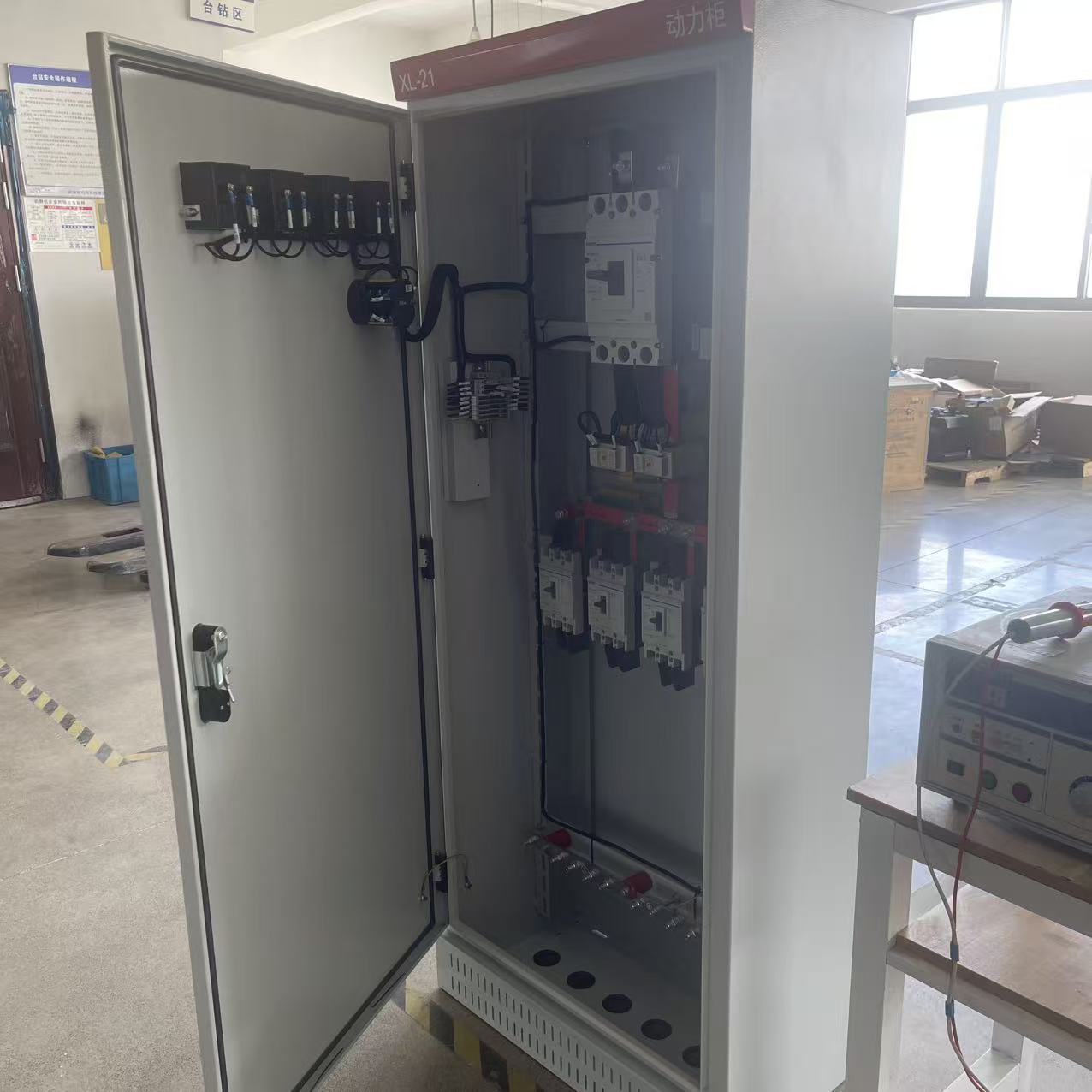
Selection Trade-Off: Vacuum Circuit Breaker (VCB) vs Vacuum Load Switch-Fuse Combination
Choosing the right medium-voltage switching device is not simply a matter of selecting the newest or most compact technology. For transformer substations, the better decision depends on transformer capacity, fault current, protection requirements, operating frequency, maintenance expectations, and the total cost of ownership.
The two solutions most often compared are a Vacuum Circuit Breaker (VCB) and a vacuum load-break switch-fuse combination. Both can provide reliable switching and transformer protection, but they are designed for different duty levels and operating conditions. Selecting the wrong option may lead to unnecessary capital costs, inadequate protection, difficult coordination, or avoidable downtime.
This guide explains the practical differences between the two technologies and helps engineers, contractors, and equipment buyers determine which solution is suitable for a particular medium-voltage transformer installation.
Quick Decision: Which Solution Should You Choose?
As a general rule, a vacuum load-break switch-fuse combination is well suited to small and medium-capacity transformers where simple, economical protection is required. A VCB is usually the preferred choice for larger transformers, high short-circuit levels, frequent switching, advanced protection, and installations that require remote control or system automation.
| Selection factor | Vacuum circuit breaker | Vacuum load-break switch-fuse combination |
|---|---|---|
| Typical transformer application | Medium and large transformers | Small and medium transformers |
| Fault interruption | Interrupts fault current through a controlled trip mechanism | High-voltage fuses interrupt transformer faults |
| Protection flexibility | High; supports adjustable electronic relays | Limited by fuse characteristics |
| Frequent switching | Suitable | Not normally the first choice |
| Remote operation and automation | Excellent | Limited, depending on the switch design |
| Initial cost | Higher | Usually lower |
| Fault event recovery | Breaker can normally be reset and reclosed after inspection | Fuse replacement is required after operation |
What Is a Vacuum Circuit Breaker?
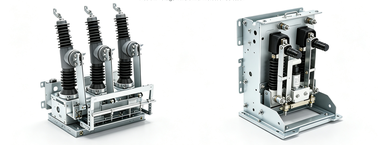
A vacuum circuit breaker uses sealed vacuum interrupters to open and close a medium-voltage circuit. When a fault occurs, a protection relay detects the abnormal current and sends a trip signal to the circuit breaker. The contacts separate inside the vacuum interrupter, extinguishing the arc and isolating the faulty section.
A VCB can be equipped with an electronic or numerical relay that provides functions such as overcurrent protection, earth-fault protection, short-circuit protection, thermal protection, and sometimes transformer differential protection. Its settings can be adjusted to match the transformer rating, cable characteristics, system fault level, and upstream or downstream protection devices.
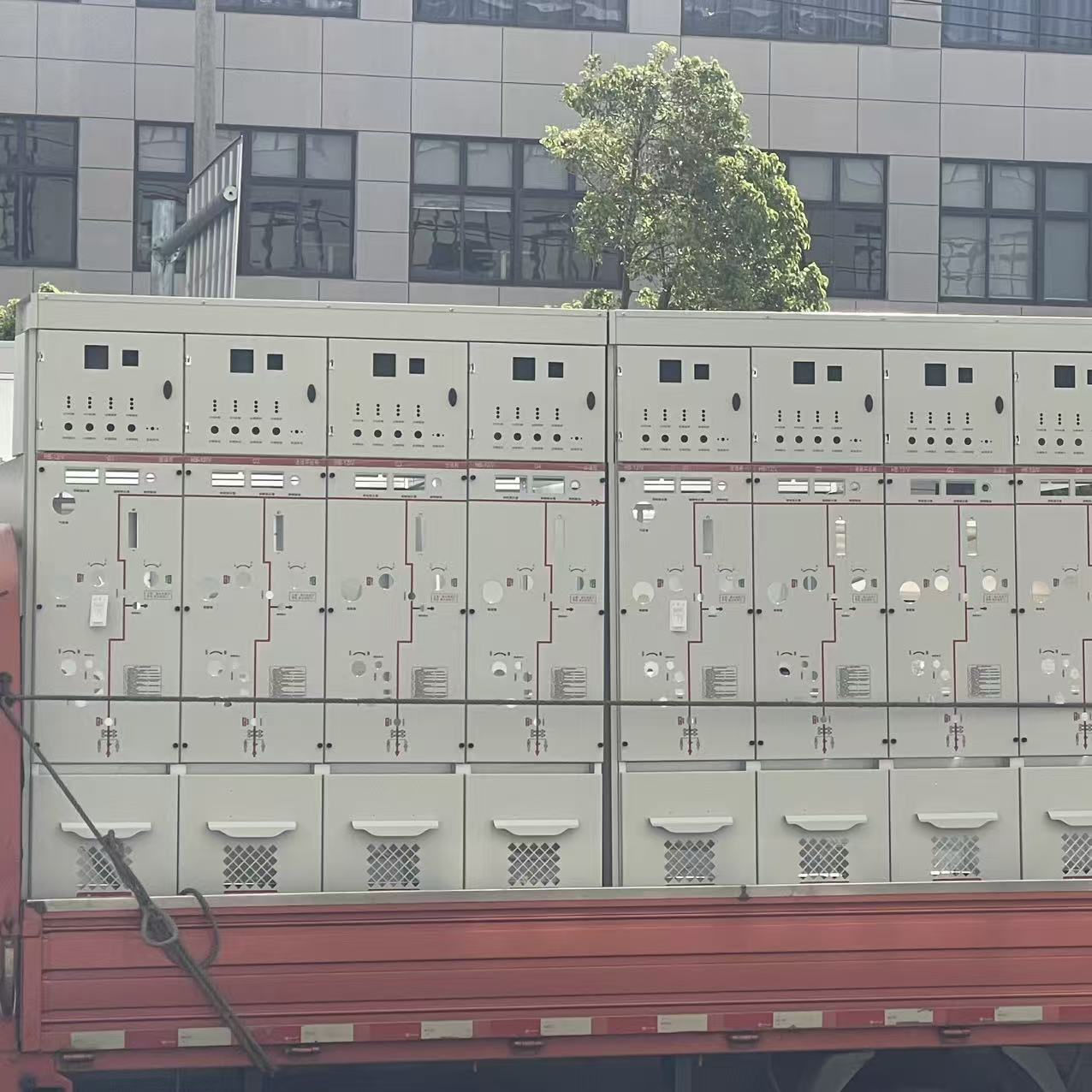
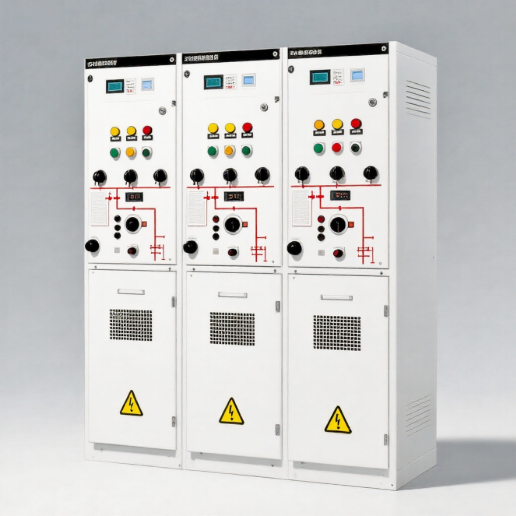
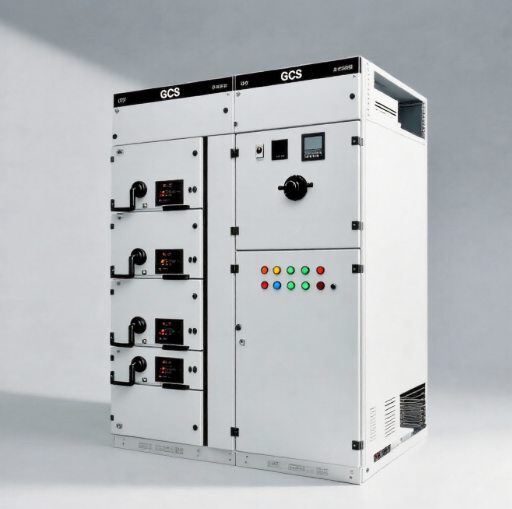
Because the interrupting element is not consumed during every fault operation, a VCB is particularly useful where the equipment may need to operate repeatedly or where rapid restoration is important. It is also well suited to Switchgear Lineups with motorized mechanisms, remote monitoring, interlocking, and supervisory control systems.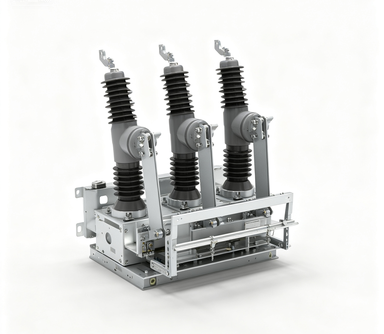
What Is a Vacuum Load Switch‑Fuse Combination ?
A vacuum load-break switch-fuse combination combines a load-break switch with current-limiting medium-voltage fuses. The switch is designed to make, carry, and interrupt normal load current. If a short circuit or severe overcurrent occurs, the fuse melts and interrupts the fault current.
This arrangement is widely used for transformer feeder protection because it is compact, relatively simple, and economical. The fuse can provide fast current limitation, helping reduce thermal and mechanical stress on the transformer and downstream equipment.
However, the switch and fuse perform different functions. The load-break switch is intended for normal-load switching, isolation, and sometimes earthing operations, while the fuse provides automatic fault interruption. It is not equivalent to a fully rated circuit breaker with adjustable relay protection.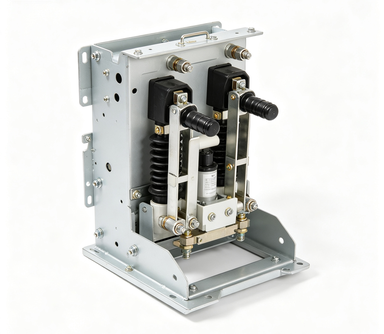
Key Differences Between Vacuum Circuit Breaker and Load-Break Switch-Fuse
1. Protection principle
The VCB relies on a protection relay and a trip mechanism. This allows engineers to select and coordinate operating curves for different fault conditions. The vacuum load-break switch-fuse combination relies mainly on the fuse’s time-current characteristics.
Fuse protection is effective and fast, but the available settings are determined by the selected fuse rating and its operating curve. A relay-controlled VCB offers much greater flexibility, especially when transformer inrush current, motor starting current, cable protection, and selective coordination must all be considered.
2. Response to transformer faults
Both systems can protect a transformer from short circuits, but they behave differently when a fault occurs. A fuse operates by melting and must be replaced. A VCB trips mechanically and can generally be returned to service after the cause of the fault has been investigated and the equipment has been inspected.
This difference matters in facilities where downtime is expensive or spare medium-voltage fuses are not readily available. For critical infrastructure, the faster restoration process of a VCB may justify its higher purchase price.
3. Switching frequency
A load-break switch-fuse combination is generally intended for occasional transformer energization, de-energization, and isolation. It may not be the best option for applications requiring frequent operational switching.
A VCB is more appropriate when the transformer is regularly switched, controlled by an energy management system, or integrated into an automatic transfer or distributed control system. The breaker can also be operated locally or remotely, depending on the switchgear configuration.
4. Protection coordination
Protection coordination is one of the most important differences. A fuse has a fixed characteristic, and its behavior can be affected by transformer inrush current, ambient temperature, and manufacturing tolerances. The engineer must verify that the fuse will not operate unnecessarily during transformer energization while still clearing dangerous faults quickly.
With a VCB, the relay settings can be adjusted during commissioning or after a system expansion. This makes it easier to coordinate the transformer feeder with upstream breakers, downstream feeders, generators, and utility protection equipment.
5. Installation and lifecycle cost
The initial cost of a vacuum load-break switch-fuse combination is usually lower than that of a VCB panel. It may also require less control wiring and occupy less space. For a straightforward transformer substation, these advantages can be significant.
A VCB normally costs more because it includes a circuit breaker mechanism, protection relay, control circuits, and often a more sophisticated switchgear compartment. Nevertheless, the total lifecycle cost may be lower when reduced outage time, remote operation, adjustable protection, and easier system expansion are taken into account.
Applicable Conditions for Vacuum Circuit Breaker (VCB)
A VCB should be strongly considered in the following conditions:
- The transformer has a large capacity or supplies an important production process.
- The installation requires adjustable overcurrent and earth-fault protection.
- The transformer is switched frequently or controlled automatically.
- Remote control, SCADA communication, or unattended operation is required.
- The available short-circuit current is high and protection coordination is complex.
- The facility cannot tolerate long outages after a fault.
- Future expansion may change the system fault level or loading conditions.
- Multiple feeders, generators, or transformers must be selectively coordinated.
VCBs are common in industrial plants, data centers, hospitals, commercial complexes, utility substations, renewable-energy collection systems, and large infrastructure projects. They are also a practical choice when a project specification requires numerical relays, event recording, communication protocols, or remote operation.
Applicable Scenarios of Vacuum Load-Break Switch-Fuse Combination
A vacuum load-break switch-fuse combination is often the right choice when the transformer is relatively small, the protection scheme is uncomplicated, and cost-effective equipment is the priority.
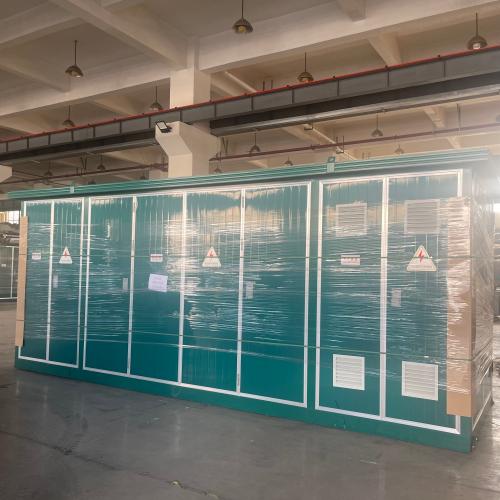
Typical applications include compact package substations, commercial buildings, residential distribution systems, small factories, agricultural facilities, and temporary or standardized power distribution projects. It can also be suitable when the transformer is not switched frequently and the owner accepts the need to replace a fuse after a fault.
This solution is especially attractive when space is limited. Its compact structure can simplify the design of ring main units and prefabricated substations. However, the selected fuse must be correctly matched to the transformer rated current, inrush current, short-circuit level, and the manufacturer’s recommended protection curve.
Transformer Protection Considerations Before Making a Selection
Transformer inrush current
Transformer energization can produce a high inrush current that lasts for a short period. If the fuse or relay settings are too sensitive, the protection device may operate during normal energization. The protection design must distinguish between temporary magnetizing inrush and a genuine internal fault.
Short-circuit current
The calculated prospective short-circuit current determines the required interrupting capacity of the switchgear or fuse. Never select equipment based only on transformer rated power. The utility network, transformer impedance, cable length, parallel sources, and generator contribution all affect the fault level.
Transformer damage curves
The protection device should clear faults within the limits of the transformer damage curve. Engineers should compare the relay or fuse operating curve with the transformer thermal and mechanical withstand characteristics. This verification is essential for both VCB and fuse-based protection.
Earth-fault protection
Earth-fault requirements vary according to the system grounding method. A VCB relay can normally provide more adjustable earth-fault protection than a fuse combination. In resistance-grounded, solidly grounded, or special industrial networks, this difference may influence the final decision.
Standards and certification
Equipment should be selected according to the applicable standards, such as IEC 62271 series requirements for medium-voltage switchgear, IEC 60282 requirements for high-voltage fuses, and relevant local regulations. The manufacturer should provide type-test information, rated voltage, rated current, short-time withstand current, peak withstand current, and rated short-circuit breaking capability.
Are Surge Arresters Required for Transformers with Both Vacuum Switch Solutions?
Surge arresters are not automatically mandatory simply because the transformer is protected by a VCB or a vacuum load-break switch-fuse combination. Their necessity depends on the system’s insulation coordination, cable length, switching conditions, lightning exposure, transformer insulation level, and the risk of transient overvoltage.
In many medium-voltage transformer installations, surge arresters are recommended at the transformer terminals, particularly where overhead lines are involved, lightning exposure is significant, the transformer is expensive or critical, or the connecting cable is long. Surge arresters can also be useful where vacuum switching may produce steep-front transients or restrikes.
The final decision should be based on an insulation-coordination study and the manufacturer’s installation recommendations. The arrester voltage rating, continuous operating voltage, energy capability, location, and grounding connection must all be selected correctly. Installing an arrester with an unsuitable rating can reduce protection performance or create unnecessary leakage current.
Common Selection Mistakes to Avoid
One frequent mistake is choosing equipment solely according to purchase price. The least expensive panel may become the most expensive option if every fault requires a special fuse, a long outage, and manual troubleshooting.
Another mistake is assuming that every vacuum device has the same interruption capability. A vacuum load-break switch is not automatically a vacuum circuit breaker. Buyers should check whether the device is rated for load current only, fault making, fault breaking, or complete circuit-breaker duty.
It is also important not to select a fuse by transformer kVA alone. Fuse selection must consider the transformer primary current, inrush current, ambient temperature, installation arrangement, fuse type, and coordination with secondary protection.
Finally, project teams should confirm maintenance access, interlocking, earthing arrangements, spare-parts availability, control voltage, communication requirements, and the manufacturer’s after-sales support before placing an order.
Frequently Asked Questions
Can a load-break switch-fuse combination replace a vacuum circuit breaker?
In some small or medium-capacity transformer applications, yes. A correctly rated load-break switch-fuse combination can provide effective transformer feeder protection when frequent switching, adjustable relay protection, remote control, and complex coordination are not required.
It should not be considered a direct replacement where the project requires circuit-breaker fault interruption, numerical relay protection, automatic reclosing, remote operation, frequent switching, or detailed coordination with several power sources. The decision must be based on the complete protection study rather than on the physical voltage rating alone.
Why must VCB be selected for large-capacity transformers above 1250 kVA?
There is no universal rule that makes a VCB mandatory for every transformer above 1250 kVA. However, larger transformers generally require more accurate and flexible protection, have higher fault consequences, and often supply more critical loads. A VCB allows adjustable relay settings, better selectivity, remote control, fault recording, and easier restoration after a trip.
The 1250 kVA value is therefore a widely used engineering guideline, not a substitute for a detailed design review. Utility rules, local standards, transformer impedance, system grounding, fault current, and load criticality must also be considered.
Are surge arresters required for transformers with both vacuum switch solutions?
Not in every installation, but they are often recommended. The requirement depends on lightning exposure, overhead or underground connections, cable length, switching transients, transformer insulation level, and the results of insulation coordination. Surge arresters are particularly advisable for critical or high-value transformers and installations connected to overhead distribution lines.
Which option is easier to maintain?
The answer depends on the type of maintenance being considered. A fuse combination has a simpler mechanism, but the fuse must be replaced after operation. A VCB has more control and mechanical components, yet it can normally be reset after a trip and provides diagnostic information through its relay. For critical facilities, the VCB may offer easier operational recovery even though its initial maintenance requirements are more extensive.
Which solution is better for remote monitoring?
A VCB is generally better suited to remote monitoring and control. It can be integrated with motor operators, protection relays, SCADA systems, intelligent electronic devices, and communication networks. Some load-break switch-fuse units can include motorized operation and status monitoring, but their fault protection remains dependent on the fuse and is usually less adjustable.
How to Make the Final Selection
Before requesting a quotation, prepare the transformer rated power, primary and secondary voltage, frequency, impedance, vector group, connection method, grounding system, calculated short-circuit current, load profile, switching frequency, and required protection functions.
Then compare both solutions against the project’s operating objectives. If the installation is simple and cost-sensitive, a fuse combination may provide an efficient and reliable solution. If the transformer is large, critical, frequently switched, remotely controlled, or connected to a complex network, a VCB will usually provide greater long-term value.
Ask the supplier to provide a protection coordination review, type-test documentation, dimensional drawings, wiring diagrams, technical datasheets, recommended spare parts, and clarification of the warranty and service scope. A qualified medium-voltage engineer should approve the final configuration before procurement and commissioning.
For most uncomplicated small-transformer substations, a vacuum load-break switch-fuse combination offers compact and economical protection. For larger or more critical installations, a Vacuum Circuit Breaker (VCB) generally delivers superior protection flexibility, coordination, automation, and service restoration. The best choice is not determined by kVA alone; it is the solution that matches the transformer’s risk profile, operating conditions, fault level, and lifecycle requirements. When the project demands adjustable protection and dependable control, Vacuum Circuit Breaker (VCB) is usually the safer long-term investment, while a properly engineered vacuum load-break switch-fuse combination remains an excellent choice for straightforward medium-voltage transformer protection.