


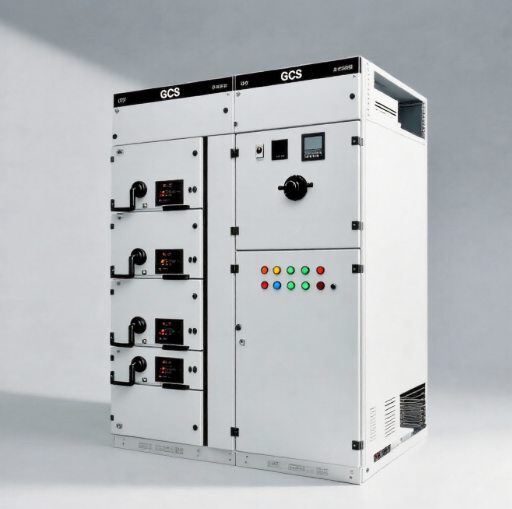
Ring Main Unit and Switchgear: Medium-Voltage Distribution Selection, Safety Protection and Application Guide
Choosing the right medium-voltage distribution equipment affects far more than the initial project cost. It determines how reliably a facility receives power, how safely technicians can operate the network, how quickly faults can be isolated, and how easily the system can be expanded in the future. For this reason, buyers often compare RMU and Switchgear when planning utility networks, industrial plants, commercial buildings, renewable energy projects, and prefabricated substations.
Although ring main units and medium-voltage switchgear perform related functions, they are designed for different levels of protection, operational flexibility, fault management, and space availability. This guide explains the differences, selection criteria, safety features, insulation technologies, maintenance requirements, and application scenarios so that project owners, electrical contractors, consultants, and purchasing teams can make a technically sound decision.
What Is a Ring Main Unit?
A ring main unit, commonly called an RMU, is a compact medium-voltage switchgear assembly used to connect, control, protect, and isolate sections of a distribution network. It is usually installed in a ring-shaped distribution system, where power can reach a load from more than one direction.
A typical RMU may include two ring switches for incoming and outgoing feeders, together with a transformer protection section. The transformer feeder can use either a load-switch-fuse combination or a vacuum circuit breaker, depending on the required protection level and operating conditions.
RMUs are commonly used at medium-voltage levels such as 6 kV, 10 kV, 11 kV, 12 kV, 20 kV, and 24 kV. Equipment ratings vary by manufacturer and region, so the rated voltage, insulation level, short-time withstand current, and installation environment must always be checked against the project specification.
The main purpose of an RMU is to provide reliable and compact distribution switching. It allows operators to isolate a faulty cable section or transformer while keeping healthy parts of the network energized. This arrangement can significantly reduce outage duration in urban distribution systems and other installations where continuity of service is important.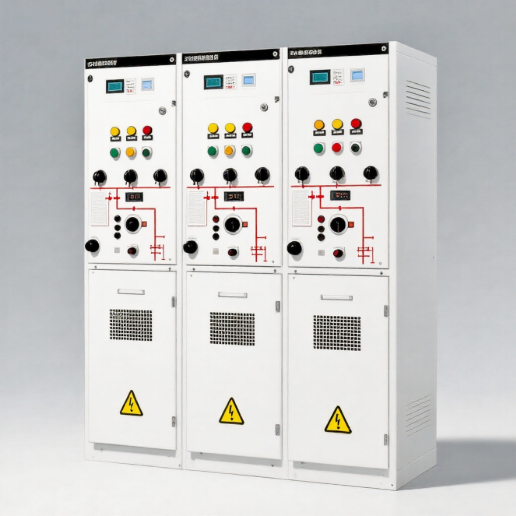
What Is Medium-Voltage Switchgear?
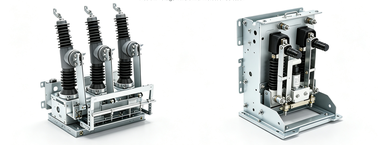
Medium-voltage switchgear is a broader category of electrical equipment used to switch, control, protect, measure, and isolate medium-voltage circuits. It may be installed indoors or outdoors and can be configured for incoming feeders, outgoing feeders, bus-section coupling, transformer protection, motor control, capacitor banks, generator connections, and distribution automation.
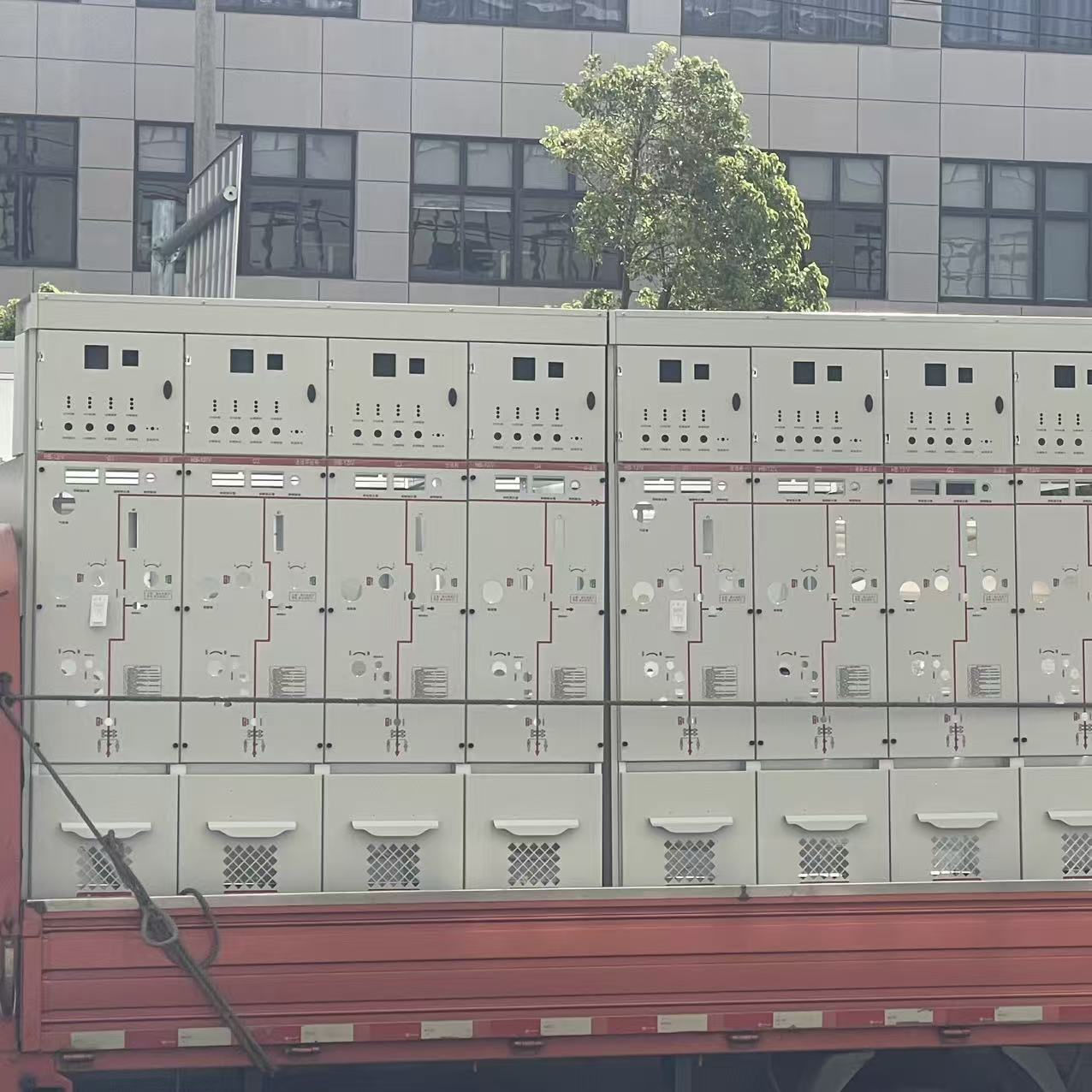
Unlike a compact RMU, a Switchgear Lineup normally offers greater flexibility in its internal arrangement. It may contain several separate panels, withdrawable circuit breakers, instrument transformers, protection relays, busbar compartments, cable compartments, and control or metering sections.
Medium-voltage switchgear can be built using air insulation, gas insulation, solid insulation, or a combination of technologies. The choice depends on the rated voltage, available space, environmental conditions, arc-flash requirements, service continuity, maintenance philosophy, and budget.
RMU and Switchgear: The Main Differences
An RMU should not be viewed as a lower-quality version of switchgear. It is a specialized, compact solution optimized for medium-voltage distribution networks. Conventional switchgear is a more configurable platform designed for demanding protection and control requirements.
| Comparison point | Ring main unit | Medium-voltage switchgear |
|---|---|---|
| Primary purpose | Compact ring-network switching and transformer distribution | Flexible control, protection, measurement, and switching |
| Typical configuration | Two ring feeders plus a transformer feeder | Multiple feeder, bus-section, transformer, motor, and metering panels |
| Space requirement | Small footprint | Usually larger, depending on the lineup |
| Protection flexibility | Basic to moderate, depending on fuse or circuit-breaker design | High, with programmable relays and advanced protection functions |
| Operational access | Often front-operated and compact | May include fixed or withdrawable breaker compartments |
| Typical application | Distribution substations, commercial buildings, utilities, and compact substations | Industrial plants, data centers, power generation, large substations, and critical loads |
The correct choice depends on the network function rather than the equipment name. A compact RMU is often the best option for a transformer substation with straightforward protection requirements. A full switchgear lineup is more suitable when the project requires complex feeder coordination, extensive metering, frequent switching, motor protection, or high availability.
What Distribution Scenarios Are Suitable for Ring Main Units?
RMUs are especially effective in medium-voltage networks where space is limited and uninterrupted service is valuable. Common applications include:
Urban distribution networks: Underground cable networks in cities often use ring arrangements to supply multiple substations. An RMU enables operators to isolate a damaged cable section while maintaining supply through the opposite side of the ring.
Commercial and residential developments: Shopping centers, office complexes, hospitals, apartment developments, and mixed-use buildings often need compact equipment with a predictable operating procedure. RMUs can be installed in dedicated electrical rooms or prefabricated substations.
Industrial facilities: Manufacturing plants may use RMUs to connect several transformer substations across a site. Circuit-breaker RMUs are preferable where selective protection, remote control, or higher fault-clearing performance is required.
Renewable energy projects: Solar farms, wind farms, and battery energy storage systems may use RMUs at collector points or transformer stations. The equipment must be coordinated with the inverter, transformer, protection relay, and grid-connection requirements.
Infrastructure projects: Airports, rail systems, water treatment plants, tunnels, and telecommunications facilities can use RMUs where compact dimensions and reliable feeder isolation are important.
RMUs may be less suitable for large industrial substations that require many outgoing feeders, busbar sectionalizing, withdrawable breakers, extensive protection schemes, or frequent maintenance access. In these cases, a metal-enclosed or metal-clad switchgear lineup generally provides greater flexibility.
Load-Switch-Fuse RMU or Circuit-Breaker RMU?
The transformer protection section is one of the most important decisions when selecting an RMU. The two common configurations are the load-switch-fuse type and the vacuum circuit-breaker type.
Load-Switch-Fuse RMU
A load-switch-fuse RMU uses a load-break switch for normal switching and high-voltage current-limiting fuses for transformer fault protection. It is a compact and economical solution for small and medium-sized distribution transformers.
Fuses operate quickly during high-current faults and do not require a separate protection relay and current transformer arrangement in the simplest configuration. However, they must be replaced after operation, and their protection characteristics depend on the correct fuse rating and coordination with the transformer.
This configuration is often appropriate when the transformer capacity is moderate, the operating sequence is straightforward, remote control is not required, and the project prioritizes compact dimensions and lower initial cost.
Circuit-Breaker RMU
A circuit-breaker RMU normally uses a vacuum circuit breaker with protection relays and current transformers or sensors. It can interrupt a wider range of fault conditions, support adjustable protection settings, and be integrated into automation or supervisory control systems.
The circuit-breaker configuration is generally preferred for larger transformers, critical loads, renewable energy installations, industrial systems, and networks that require selective coordination. It also allows operators to open and close the feeder repeatedly without replacing fuses.
| Feature | Load-switch-fuse RMU | Circuit-breaker RMU |
|---|---|---|
| Initial cost | Usually lower | Usually higher |
| Protection adjustment | Limited by fuse characteristics | Adjustable through protection relay settings |
| Fault operation | Fuse replacement is normally required | Breaker can be reset and operated again after inspection |
| Remote control | Limited, depending on the design | Well suited to remote operation and automation |
| Typical transformer range | Small and medium distribution transformers | Medium and larger transformers or critical applications |
| Protection coordination | Relies mainly on fuse selection | Supports coordinated relay protection |
The final decision should be based on transformer power, fault level, inrush current, upstream protection, downstream coordination, network operating mode, and local utility requirements. A fuse selected only by transformer rated current may provide inadequate discrimination or nuisance operation.
Gas-Insulated RMU vs. Solid-Insulated RMU
Insulation technology affects the RMU's size, environmental profile, maintenance requirements, and long-term suitability. The two technologies frequently compared by buyers are gas-insulated and solid-insulated RMUs.
Gas-Insulated RMU
Gas-insulated RMUs use an insulating gas inside a sealed tank or compartment. Historically, sulfur hexafluoride has been widely used because of its strong dielectric and arc-extinguishing properties. However, SF6 has a high global warming potential, and many markets are moving toward low-GWP alternatives or vacuum and air-based designs.
The principal advantages of gas-insulated construction include compact dimensions, strong resistance to dust and humidity, and reduced exposure of live components to the external environment. Sealed construction can be valuable in coastal, industrial, underground, or polluted locations.
Buyers should confirm the gas type, leakage rate, end-of-life recovery procedure, pressure monitoring method, applicable environmental regulations, and whether the manufacturer provides qualified service support.
Solid-Insulated RMU
Solid-insulated RMUs use molded epoxy or another solid dielectric material around the primary conductors and switching components. This design eliminates the need for insulating gas and can reduce environmental concerns associated with SF6.
Solid insulation can provide a compact and sealed primary circuit with good resistance to external contamination. It may also support environmentally focused procurement requirements. At the same time, buyers should review the material's long-term aging performance, partial-discharge control, thermal behavior, moisture resistance, repair strategy, and product testing documentation.
| Selection factor | Gas-insulated RMU | Solid-insulated RMU |
|---|---|---|
| Footprint | Very compact | Compact |
| Environmental sealing | Strong when the tank remains properly sealed | Strong for molded primary components |
| Environmental considerations | Depends on the gas used and recovery process | No insulating gas in the primary insulation system |
| Maintenance focus | Gas pressure, density, and leakage monitoring where applicable | Visual condition, mechanical operation, and insulation health |
| Important verification | Gas type, leakage performance, and service procedures | Partial-discharge performance and insulation aging data |
Neither technology is automatically suitable for every project. The best selection depends on the installation environment, local regulations, sustainability objectives, technical specifications, and the manufacturer's service capability.
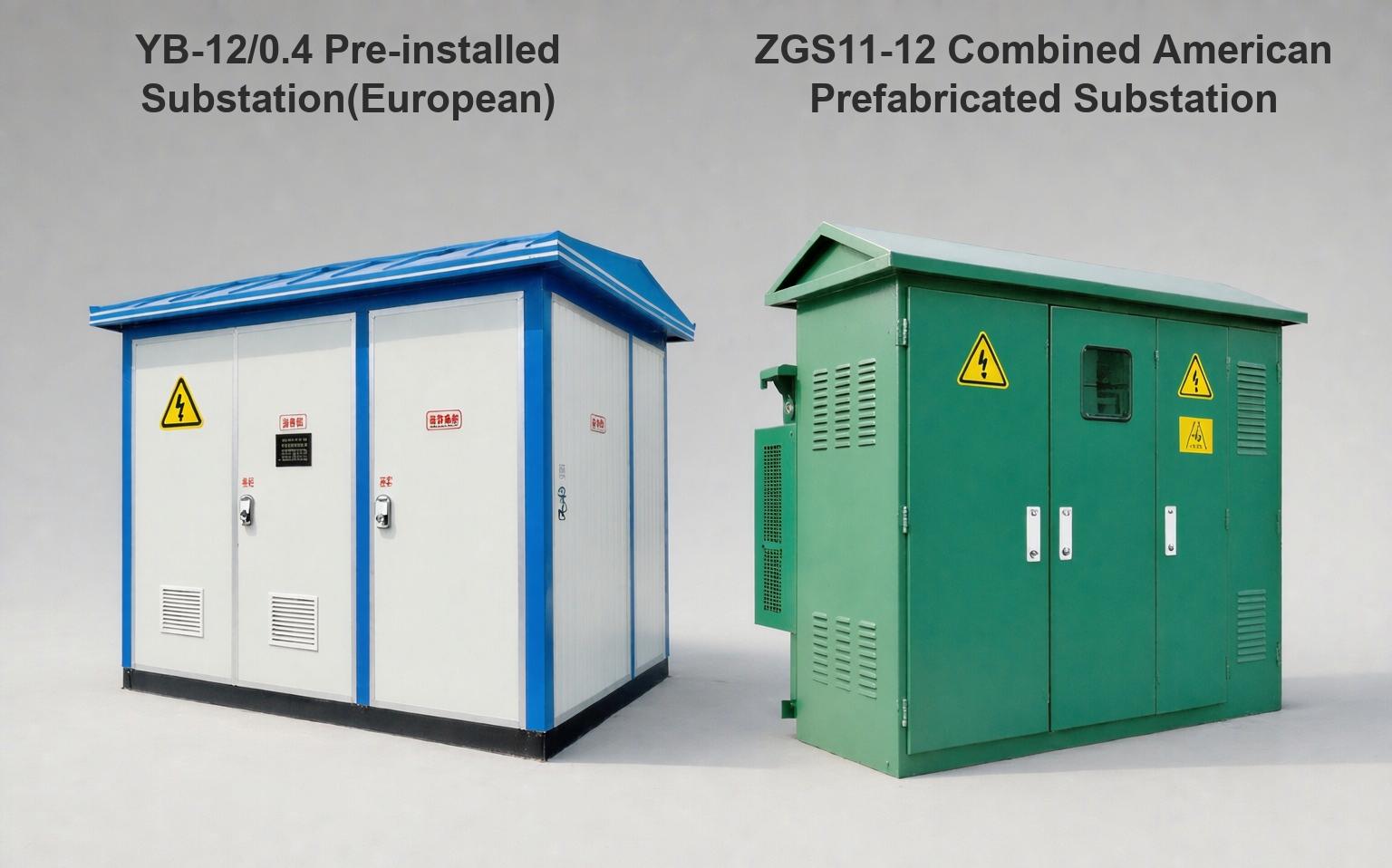
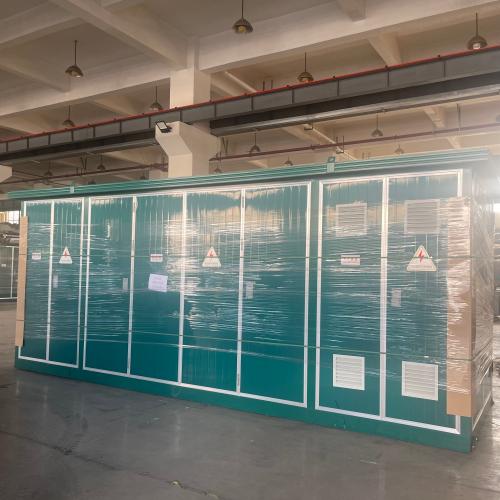
RMU Selection for Matching Prefabricated Substations
When an RMU is installed in a prefabricated substation, the equipment must be selected as part of the complete enclosure rather than as an isolated product. The RMU dimensions, cable bending radius, transformer position, low-voltage cabinet, ventilation system, and access doors all affect the final design.
Important matching points include the following:
Rated voltage and insulation level: Confirm that the RMU's rated voltage, power-frequency withstand voltage, and lightning impulse withstand voltage match the utility system.
Transformer capacity: Select the transformer feeder protection according to transformer rated power, impedance, inrush current, and fault protection requirements.
Cable connection arrangement: Check whether the RMU accepts elbow connectors, separable connectors, top-entry cables, bottom-entry cables, or a specified cable termination system.
Thermal design: The prefabricated enclosure must dissipate heat produced by the RMU, transformer, low-voltage equipment, and auxiliary systems without exceeding permissible temperatures.
Operating access: Ensure that operators can reach the switching handles, protection relay, cable compartments, and earthing points without unsafe obstruction.
Environmental protection: Review the enclosure's IP rating, corrosion protection, condensation control, altitude rating, seismic requirements, and resistance to solar heating where applicable.
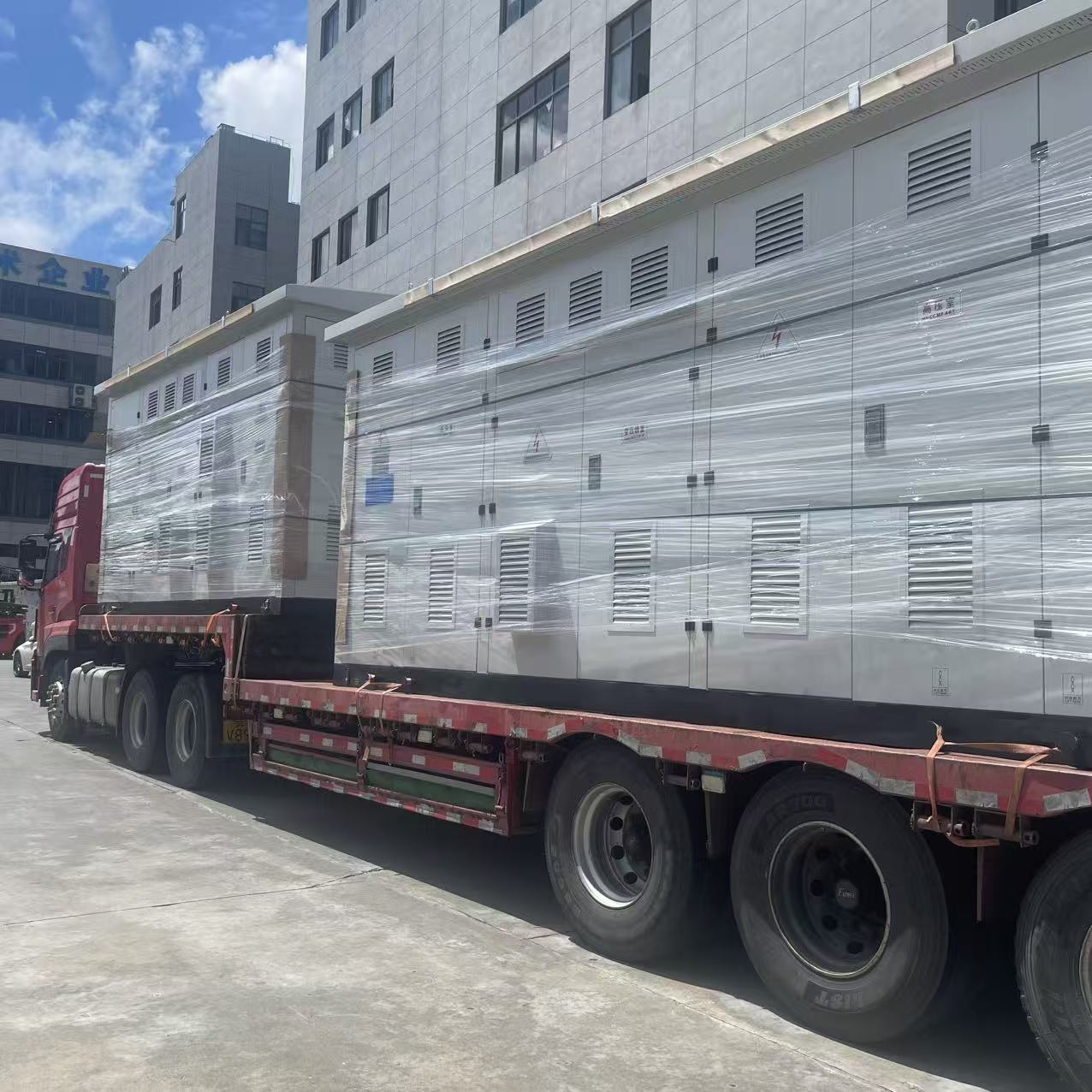
Transport and installation: Confirm lifting points, total weight, center of gravity, shipping dimensions, foundation requirements, and cable connection clearance before production.
A well-matched RMU and prefabricated substation can shorten installation time and reduce site work. However, the supplier should provide coordinated drawings showing the complete internal arrangement, cable routes, ventilation, grounding, and access clearances.
Technical Parameters Buyers Should Compare
Price is important, but it should not be the only comparison point. Request a complete technical schedule from each supplier and compare the following parameters on the same basis:
Rated voltage and rated frequency.
Rated normal current for each feeder.
Short-time withstand current and duration.
Peak withstand current.
Short-circuit breaking and making capacity.
Power-frequency and lightning impulse withstand levels.
Internal arc classification, if required.
Insulation medium and environmental impact.
Mechanical and electrical endurance.
Ingress protection rating.
Altitude and ambient temperature limits.
Busbar and cable compartment arrangement.
Protection relay type and communication protocol.
Remote-control and automation options.
Routine and type-test documentation.
Spare parts availability and after-sales support.
For projects involving a utility connection, the local utility's technical rules may be more restrictive than general international standards. Always confirm the approved equipment list, earthing requirements, metering arrangement, cable termination standard, and commissioning procedure before placing an order.
Relevant Standards and Documentation
Medium-voltage equipment is commonly evaluated against standards from the IEC 62271 series or equivalent national standards. Depending on the product and application, relevant documents may address high-voltage switchgear assemblies, circuit breakers, disconnectors, earthing switches, load-break switches, fuses, and internal arc testing.
A professional supplier should be able to provide technical datasheets, general arrangement drawings, single-line diagrams, wiring diagrams, routine test reports, type-test certificates where applicable, operation and maintenance manuals, spare-parts lists, and recommended commissioning procedures.
Documentation should clearly identify the tested product configuration. A test report for one enclosure, busbar system, breaker type, or accessibility arrangement may not automatically apply to a different configuration.
Operation and Maintenance Differences Between RMU and Switchgear
RMUs generally require less routine maintenance because the primary switching system is compact and, in many designs, sealed. Routine work commonly includes visual inspection, checking mechanical indicators, operating the switch according to the maintenance schedule, inspecting cable terminations, verifying interlocks, and checking the condition of the enclosure and grounding connections.
Gas-insulated units may require gas pressure or density checks, depending on the insulation medium and manufacturer instructions. Solid-insulated units require inspection for mechanical damage, contamination, partial-discharge concerns, and aging-related defects. Fuse-based RMUs require correctly rated replacement fuses and an established procedure for replacing operated fuses.
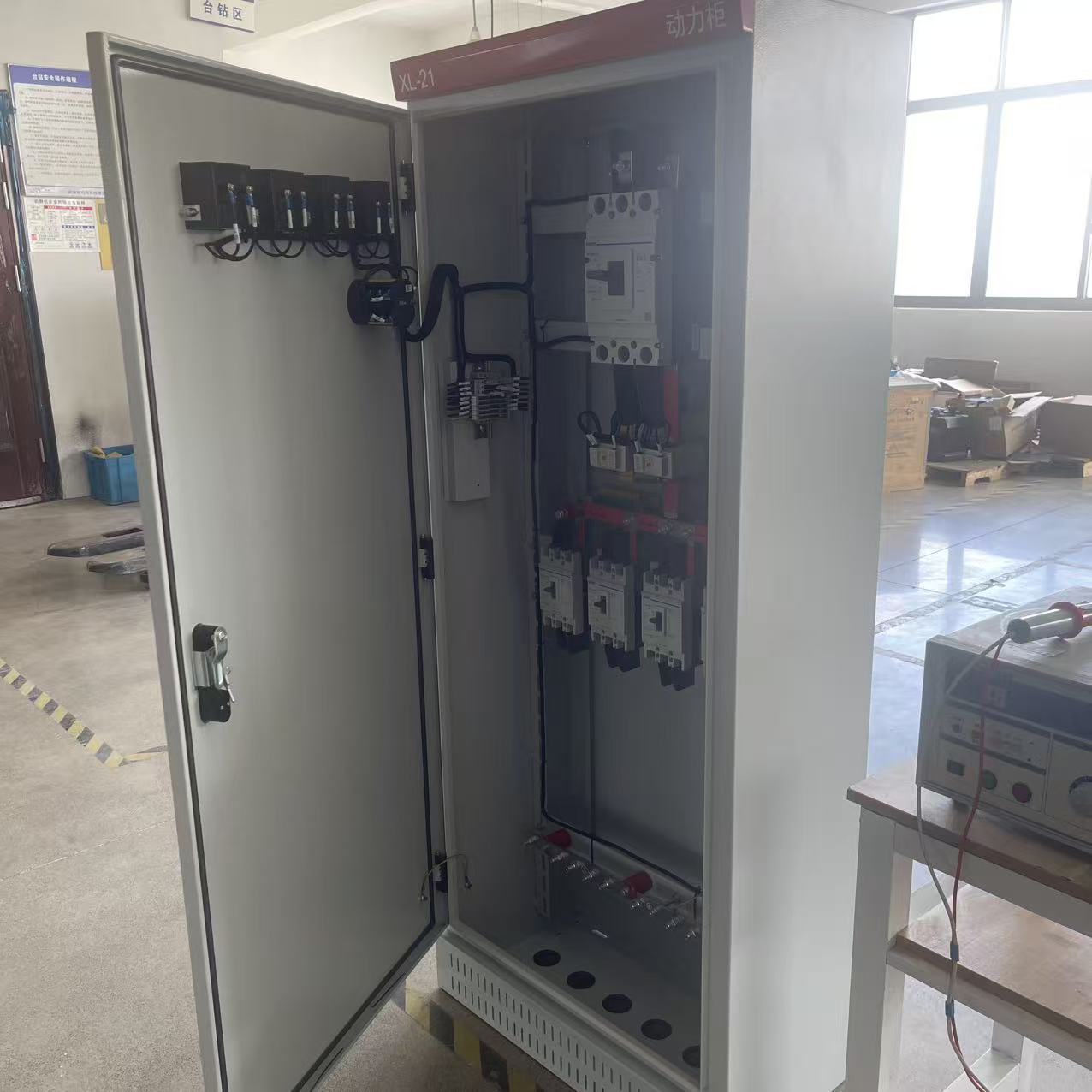
Medium-voltage switchgear usually involves more components and therefore a broader maintenance program. Circuit breakers may need mechanical operation checks, contact wear inspection, lubrication at specified points, timing tests, insulation tests, secondary injection tests, and examination of drawout mechanisms. Protection relays, instrument transformers, shutters, interlocks, and control circuits also require testing.
The maintenance interval should be determined by the manufacturer, operating duty, environmental conditions, fault history, and applicable regulations. Work on medium-voltage equipment must be carried out by trained and authorized personnel under an approved isolation, lockout, test, and grounding procedure.
Common Selection Mistakes
One frequent mistake is choosing equipment based only on rated voltage. A unit may have the correct voltage rating but insufficient short-circuit withstand capability, unsuitable cable interfaces, or inadequate protection coordination.
Another mistake is treating transformer protection as an afterthought. The choice between fuses and a circuit breaker should be made using transformer size, inrush current, fault level, selectivity, and network criticality.
Buyers also sometimes overlook environmental conditions. High altitude, salt pollution, condensation, dust, extreme temperatures, and corrosive atmospheres can affect insulation performance and enclosure life.
Finally, the lowest purchase price may result in higher lifetime costs if spare parts are difficult to obtain, relay software is unsupported, operating documentation is incomplete, or local service engineers are unavailable. Evaluate total cost of ownership, including installation, testing, maintenance, downtime, and eventual replacement.
Frequently Asked Questions
What is the difference between a load-switch-fuse RMU and a circuit-breaker type RMU?
A load-switch-fuse RMU uses fuses to clear transformer fault currents and is usually compact and economical. A circuit-breaker RMU uses a vacuum circuit breaker and protection relay, allowing adjustable protection settings, repeated operation, remote control, and more precise coordination. Fuse-based designs are often suitable for smaller distribution transformers, while circuit-breaker designs are preferred for larger transformers, critical loads, and automated networks.
What is the difference between RMU and switchgear?
An RMU is a compact type of medium-voltage switchgear designed primarily for ring-network distribution and transformer connection. Switchgear is a broader equipment category that can include multiple feeder panels, drawout circuit breakers, bus-section couplers, metering, motor feeders, and advanced protection systems.
Which is safer, an RMU or metal-clad switchgear?
Safety depends on the design, tested performance, installation, operating procedure, and maintenance quality. Both can provide strong protection when correctly specified. Metal-clad switchgear generally offers more compartmentalization and operational flexibility, while a sealed RMU can reduce exposure to environmental contamination and simplify routine operation.
Is a gas-insulated RMU better than a solid-insulated RMU?
Neither is universally better. Gas-insulated RMUs can offer excellent compactness and environmental sealing, while solid-insulated RMUs avoid insulating gas and can support sustainability objectives. The decision should consider the gas type, environmental regulations, partial-discharge performance, service support, climate, and lifecycle requirements.
How to Make the Final Decision
Start with the network diagram and identify the actual function of each medium-voltage panel. If the requirement is compact ring switching and straightforward transformer protection, an RMU will often provide the most practical solution. If the project requires multiple feeders, advanced relay protection, withdrawable breakers, complex busbar arrangements, or high operational flexibility, metal-clad or metal-enclosed switchgear may be more appropriate.
Next, verify the electrical ratings against the available fault current and the utility's requirements. Then compare insulation technology, internal arc performance, cable access, automation, maintenance procedures, documentation, delivery capability, and local technical support. A supplier that can support engineering review, factory testing, commissioning, training, and spare parts will usually offer better long-term value than a supplier competing only on equipment price.
The right selection of RMU and switchgear should balance network reliability, personnel safety, protection coordination, installation space, environmental conditions, maintenance capability, and lifecycle cost. An RMU is an efficient choice for compact ring distribution and transformer substations, while medium-voltage and metal-clad switchgear provide broader protection and control capabilities for complex or critical systems. By checking the complete technical specification, tested configuration, safety interlocks, insulation technology, and after-sales support before purchase, project owners can reduce outage risk, simplify operation, and obtain a distribution system that remains dependable throughout its service life.